
33 part 2: The Next Mile: Inside Asendia USA's New Domestic Parcel Network
🚀 Domestic shipping is about to get a lot more flexible.
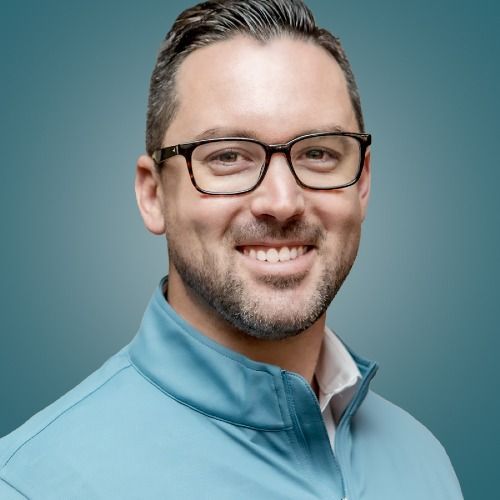
Recorded live at Parcel Forum 2026, our co-hosts Jason and Nick sit down with Doug Longobardi, Chief Revenue Officer, Asendia USA and Gerry McGowan, Executive Director US Network for Asendia to unpack "e-PAQ Select Domestic"—Asendia USA’s new multi-carrier domestic parcel solution.
What does it mean for e-commerce shippers?
📦 More carrier flexibility
🚚 Smarter middle-mile routing and zone skipping
💰 Potential cost savings through network optimization
⏱️ A targeted 1–5 day delivery experience
🔄 A domestic solution that complements international e-commerce shipping
With pilot customers already shipping and a full launch targeted for January 1, 2027, the team is building a network designed to take the complexity out of domestic parcel delivery.
🎧 Tune in to hear what’s changing—and what it could mean for your shipping strategy.
Leave your questions or comments for the team!
Learn more about this topic:
Doug Longobardi | LinkedIn
Gerry McGowan | LinkedIn
Transcript
We have a number that we're looking at per year where we will be fully optimized.
Cooking with gas ready to go.
Costs will be there but we're forward costing everything.
Right.
Let's give the benefit to the customer right away.
Let's make sure it's something we could bring on customers for.
Intro:Step into the future with shipping smart.
Outside the box is where the journey starts.
From borders to buyers, we break it down fast.
Nick and Jason, deliver knowledge that lasts.
Insight, innovation.
Wherever your brand goes, we'll guide your growth so your global reach flows.
Lean in.
Let's unlock the way.
Go outside the box with Asendia USA.
Jason Rowland:So the bones there sound like they're set up for success.
Doug Longobardi:Right.
Jason Rowland:So do we have any active customers using the service now?
What are some of the success stories and what's the value that it brings to them?
Doug Longobardi:We do.
We have three active customers that we, we chose and we said let's pilot these three customers.
Friendly customers, good customers.
One of the customers is shipping five to seven thousand parcels a day.
They saw that, what we could do and how we could do it.
So we're softly walking them through with the promise by the end of the year to deliver on that one to five days.
And we're right now getting.
We just had the stats and Gerry, I'm not sure if you saw it, it just came across my desk this morning, an email and we hit 98% in six days.
So.
So that's pretty good.
We're getting there.
Right.
So the goal is to have that tail.
That tail.
We're going to take care of the tail with different ways and Gerry is working on different methods to get that tail reduced and making sure that we're getting, hitting the five day delivery.
Nick Agnetti:Can, can you, can we just go back for a second?
So you mentioned expertise with transportation and I want to just clarify for listeners and viewers.
Jason Rowland:It.
Nick Agnetti:I want to.
Are you referring to first mile and middle mile?
Doug Longobardi:Perfect.
First mile, middle mile.
But it's more the middle mile.
Right.
Our first mile we could collect ltl bring it right into our facility.
It's the larger loads that middle mile that we need given, driven from New York to California.
I don't want to rely, we don't want to rely on somebody else to do that for us.
We want to do it ourselves.
Team driven drivers.
We can get there in 72 hours and have everything dropped and then delivered on day four and five to meet that commitment for the one to five day delivery.
Nick Agnetti:I did not realize we were modeling what we did in Canada with the U.S. market, that's pretty cool.
So Asendia, whether it's contracted assets, whatever.
Doug Longobardi:That is, we're going to utilize the Broad Reach network and we're going to take some of that network and bring that into Asendia.
Those are all trucks right now that we have already.
They're in the U.S. we're going to have these trucks.
They're going empty right now.
It's perfect.
We're going to fill them to the points and kind of do a milk run for all of the stuff going in the US and then us going into Canada.
Nick Agnetti:Okay, got it.
That's, that's pretty cool.
That's really cool, Nick.
Gerry McGowan:I'll just add to that.
Like there's more to when you start zone skipping and pushing stuff forward down this, down the carrier's chain, it's more than just maybe picking up a day.
Right.
Typically carriers run like a hub and spoke system.
So east coast might get the packages.
They'll go to a sortation center in Chicago, Chicago will sort them.
Don't go to Reno, whatever.
Right.
Multiple touches of the package.
Every time you add a physical touch to a package, there's an opportunity for damage, loss, all that.
Right.
So the quality, like the least times anybody has to touch or unload a package, you a improve your quality.
Right.
By the zone skipping, you're also going to get an average lower zone.
So that lowers the cost for, you know, the shipper or our cost, but then cost, we can get more competitive rate.
So and of course the service you pick up, you know, you can cut a day or more off in the service of then just giving it to the carrier at the origin.
You know, you're going to beat them.
You know what, I'll give this to you down there, you just do the final mile down down there.
So there's multiple benefits of doing, you know, the zone skipping and utilizing the network across the country.
Nick Agnetti:That sounds huge.
So, so for everybody listening and, and watching.
Gerry, could you just clarify what zone skipping is?
Gerry McGowan:Yeah.
So zone skipping, if I'm shipping from Pennsylvania and I ship within 300 miles, I'm a zone two.
Doug Longobardi:Right.
Gerry McGowan:And that's usually the cheapest.
But your zone, your rate cards go zones to Zone 8.
Right.
If I'm going to Seattle, Washington from there, I'm probably Zone 8.
Doug Longobardi:Sure.
Gerry McGowan:All the prices go up as the zone goes up.
Well, if I take that same two pound package and I inject it in Reno or out west somewhere at a distribution center there, that might now be a zone 3 or 4.
So I take it from an 8 to like a 4.
So my cost might go, we'll just say $5 to 450.
We'll just say so because it's less miles the carrier has to go.
So but we'll, because of, you know, the density and consolidating the volume going, we can move it there maybe that 50 cents.
We can move maybe 20 cents a package.
So then you just do 30 cents.
Just, you know, just real.
Nick Agnetti:This is why you're handling that and not me.
I see.
So, so that's, that's good.
Gerry McGowan:Yeah, but that's where the zone skipping is important because it lowers the zone stuff.
Doug Longobardi:Right.
What's big about that?
Which I'm just to add to what Gerry just said.
What's, what's really important about the zone skipping.
You need dense volume.
You need good volume to do it.
You can't do it with two or five hundred items a day.
We have a, we have a number that we're looking at per year where we will be fully optimized.
Cooking with gas, ready to go.
Costs will be there, but we're forward costing everything.
Right.
Let's give the benefit to the customer right away.
Let's make sure it's something we could bring on customers for.
Salespeople are saying to us, and they're coming to us every other day and every other week saying, when is it going to be ready?
I have, there's 20 clients that we have right now in the queue ready to come on, pull the trigger.
And we're just going through and just making sure it's set up properly.
Nick Agnetti:Okay.
Doug Longobardi:And we're being very careful not to make sure, making sure that we're not going to be launching it during peak, let's launch it right after peak.
Have everything down.
We have the carrier leverage balance in place and we have some more time to get on those, those additional regional carriers that we're looking for.
Nick Agnetti:Okay, so, so let's talk a.
Let's just.
It's not in your notes, by the way.
Intro:I'm.
Nick Agnetti:Yeah, yeah.
I'm going rogue.
I'm going rogue.
So let's talk about ICP when it comes to this product.
So your ideal customer profile, what does that look like for those that might be viewing, you know, watching, listening, whatever that is.
Doug Longobardi:That's one of my favorite questions.
Right.
And I, and I ask that all the time.
And I like to give that answer.
It's anybody that has 1,000 to 2,000 pieces a day utilizing USPS ground advantage, that needs a better Service at a lower price point.
That's an ideal customer for us.
Great.
Okay.
Nick Agnetti:1,000 To 2,000 per day using USPS.
Doug Longobardi:Ground advantage or some of our.
Gerry McGowan:Or UPS or FedEx.
Doug Longobardi:UPS, FedEx.
Gerry McGowan:High price point.
Doug Longobardi:And our competitors, Kerrangs.
Nick Agnetti:All right, Jason, do you have any other questions or anything you want to know?
Jason Rowland:I just.
I think, you know, it's a product that I think Asendia is going to be really proud of in the next year or two as it comes online and really starts to grow and hit its stride.
And I think you guys have done a great job standing it up and.
And creating it, and I'm excited to see how far you guys could take it.
Nick Agnetti:Yeah, I love learning about the middle mile.
I think that's.
That's going to be huge.
Yes.
And that.
That's.
That could be something that, in terms of our value prop, isn't something that we necessarily would dive into in a client conversation unless we needed to.
But in terms of pricing, that could seriously set us apart.
When you're looking at that ideal customer, if you're evaluating their book of business or their volumes, that'll be a huge advantage.
You all heard it first From Doug Longobarti.
,:If it doesn't happen, I'm just gonna put it down on the camera right there.
So.
All right, thank you both very much for being.
Any final thoughts that you guys want to add before we close out?
Doug Longobardi:This is probably one of our biggest initiatives.
Top three initiatives for:We're geared up.
We're ready to go.
We're meeting on it on a weekly basis and sometimes a couple of times a week to make sure that we're on point to hit that date of January 1st.
Nick Agnetti:Okay, Gerry.
Jason Rowland:Outstanding.
Gerry McGowan:No, it's just.
It's a great time to be doing this because the Final Mile Network is very competitive.
Nick Agnetti:Okay.
Gerry McGowan:Very competitive pricing and equality.
So it's a great opportunity because it gives us a lot of flexibility to really get the best solution out there, you know?
So I.
It's a. I'd rather be doing this now than when we were in Covid.
Right, sure.
Like, we couldn't get a carrier pickup prices were crazy.
But there's so much capacity now.
You know, you got doordash, you got Amazon, you got all these people that are in different niches trying to do final mile delivery.
So it's very interesting.
And it's evolving.
It's still evolving.
So it's fun times.
To be doing this.
Nick Agnetti:Love it.
Okay.
Doug Longobardi:One last thing I have to say is, Nick, big things are expected from you with this product, and I know you're gonna kill it on the sales front.
Nick Agnetti:All right, you gave it back.
You volleyed it back.
Let's cross it up.
That's fine.
Okay.
So, everybody, thanks so much for joining us for another episode of Outside the Box of the Sendia USA podcast.
to come today at PARCEL Forum:Doug and Gerry, thank you guys for joining us.
Doug Longobardi:Thank you for.
Jason Rowland:Thank you so much, guys.
Doug Longobardi:Bye, guys.
Outro:Share subscribe and download our podcast to learn more about today's topic.
Or for a free consultation, email us at ecommerce.usa@asendia.com Come back for more insightful discussions on e-commerce, shipping to Canada, Mexico, and worldwide.